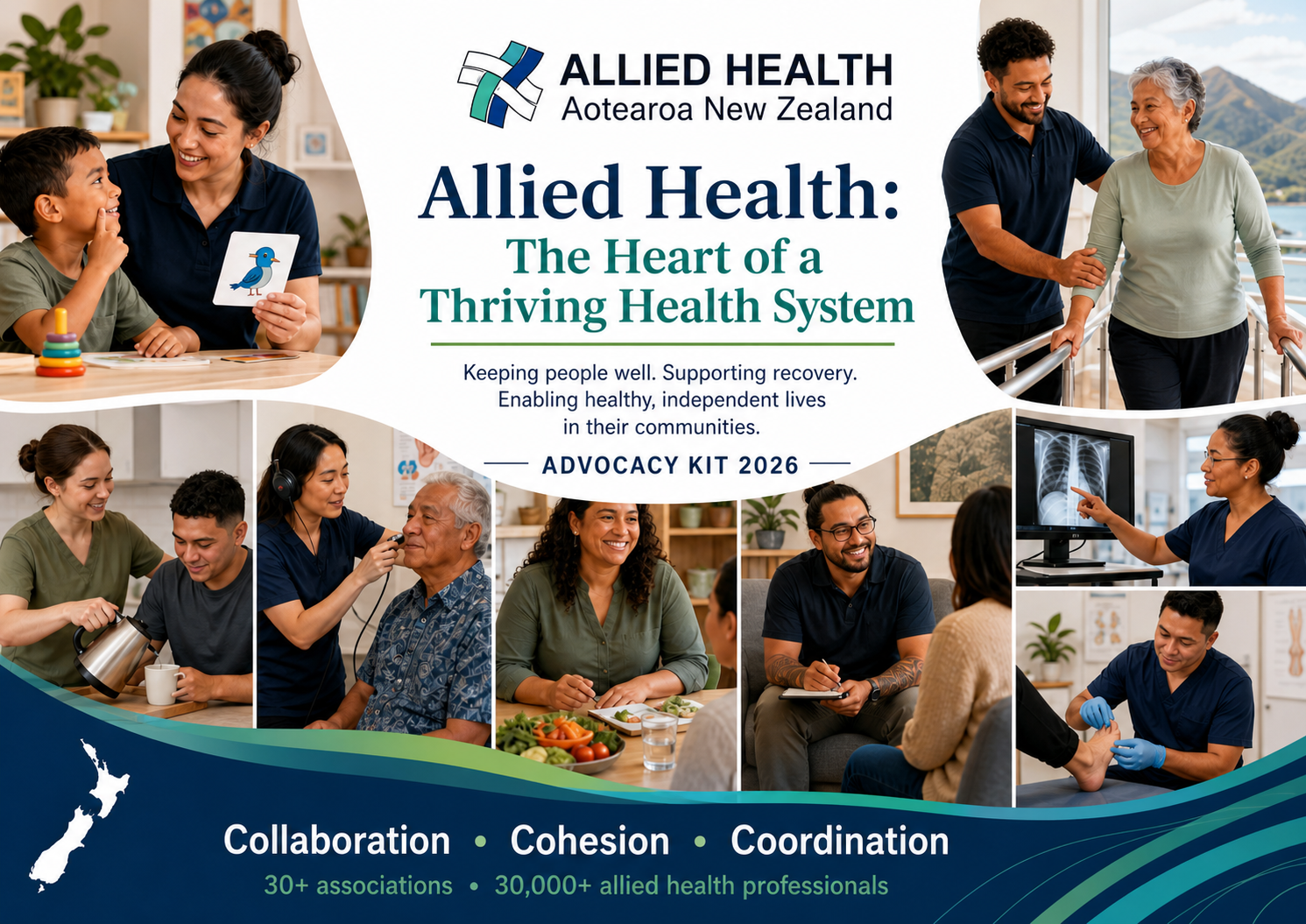
Call for case studies to bring our advocacy to life

Allied Health • March 3, 2026

In this newsletter’s editorial, we highlighted the importance of a strong, united allied health voice as we head toward the 2026 election. Our four AHANZ advocacy policy positions and our Election 2026 Manifesto set out clear solutions for a prevention-focused, equitable, well-planned and visible allied health contribution to Aotearoa New Zealand’s health system.


Now, we need your help to bring those messages to life.


Policy arguments are strengthened by real-world stories. Decision-makers respond to evidence — but they are moved by examples that show the human impact of system gaps and the practical solutions already working in communities.


We are seeking case studies from member organisations that highlight:

  • Prevention in action – where early allied health intervention has reduced hospital demand, improved recovery, or prevented escalation of need.
  • Equity and Te Tiriti in practice – examples demonstrating culturally responsive models, improved access for Māori, Pacific, rural or underserved communities, or partnerships that uphold Tiriti principles.
  • Workforce challenges and solutions – recruitment gaps, service shortages, innovative role design, or transferable skills supporting broader system pressures.
  • Data, visibility and integration issues – where lack of interoperable systems, incomplete data, or funding silos create barriers. And where better information has improved outcomes.


We are interested in stories that illustrate problems, unmet need, and system fragmentation, plus examples of effective, scalable solutions.


AHANZ will use selected case studies to support meetings with political Parties, briefing papers, media engagement and wider advocacy activities throughout this election year.


If you have a case study to share - large or small - please email a brief outline to admin@alliedhealth.org.nz.


Together, we can ensure that allied health is not only heard in policy debates, but clearly seen, understood and valued.

AHANZ MEMBER NEWS, UPDATES AND EVENTS
By Allied Health Admin March 3, 2026
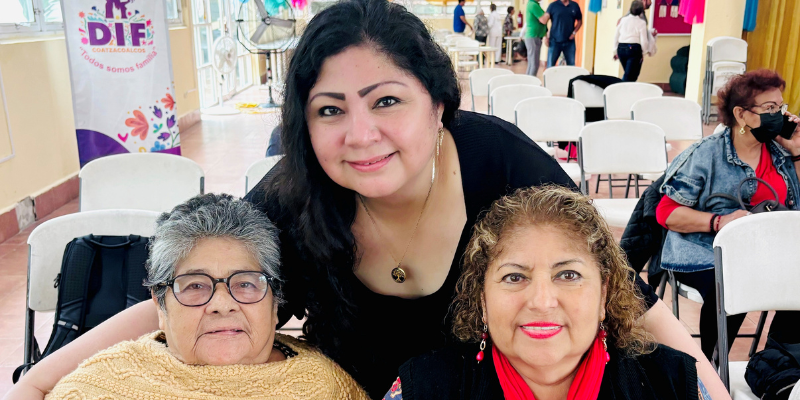
By AHANZ co-Chair, Orquidea Tamayo Mortera, MNZM The holiday season often brings a sense of peace and renewal, yet for those who care for ageing loved ones, it transforms into a profound journey of the heart. Last Christmas, I travelled back to Mexico, not just for celebration, but to stand beside my mother, finding courage as she faces new mobility limitations; my father, whose wisdom deepens as the years pass; and my Nana, who bravely embraces the changes of her mind with grace. Amidst challenges and shifting realities, the Allied Health workforce shone as a beacon of hope. Their expertise, compassion, and unwavering presence transformed uncertainty into possibility, reminding us that healing is not just about medicine, but about dignity and connection. In Mexico, care and support are a vibrant tapestry, woven from threads of science and spirit, tradition and innovation. Caregivers honour the whole person, body, mind, soul, spirit, embracing every story, every memory, and every aspiration. I witnessed practitioners blending wisdom from ancient roots with the precision of modern practice, revealing that true health care radiates from respect, love, and understanding. A physical therapist looks beyond muscles, seeing the spirit’s yearning to dance. A cognitive specialist listens not only for answers, but for the echoes of ancestral tales and lived wisdom. In this holistic approach, care becomes a celebration of life, a reverence for those who came before and those who will come after. As a Therapeutic Recreation Specialist, I have seen that blending scientific knowledge with cultural and spiritual understanding dignifies every moment. By honouring indigenous perspectives, care and support teams uplift elders, recognising them as the keepers of wisdom. Even as bodies change, their stories and strengths shine, inspiring us to see ageing as a gift and elders as treasures to be cherished. As a MexiKiwi, I celebrate the powerful connection between Mexico’s ‘El Buen Vivir – Good living and Dying’ and New Zealand’s Hauora and indigenous models like Fonofale, Te Wheke, and Te Whare Tapa Whā. Both cultures remind us that health is not measured in deficits, but in strengths, preferences, abilities, and the courage to lead our own journeys. They teach us that care and support is about empowering people to write their own stories, to choose their own paths, and to be honoured for all they are. Witnessing the work of allied health professionals in Mexico, whether in the heartbeat of the city or the quiet landscapes of rural communities, revealed a universal truth. Across both Mexico and Aotearoa New Zealand, the aim is unwavering: to restore agency, provide comfort, and celebrate every life story. This is the essence of care, united by compassion, strengthened by diversity, and illuminated by love. Returning to New Zealand, I am filled with gratitude for my heritage and renewed passion for holistic care. The most impactful support comes when science and spirit walk hand in hand. Caring for our elders with dignity is not just a duty, but a sacred act, echoing the Mexican proverb: amor con amor se paga, love is repaid with love. Let us cherish those who paved the way and honour them with hearts full of compassion.
By Allied Health Admin March 3, 2026
AHANZ commits to a health system that honours Te Tiriti o Waitangi, ensuring Māori have the agency to lead their own health journeys and receive care and support that is culturally safe and effective. We also feel strongly that New Zealanders deserve a health system that does not simply respond to illness, but actively enables wellness. Yet our system is under sustained pressure. Too many people are waiting too long for the care and support they need. As such, the system risks failing its Tiriti obligations, including Tino Rangatiratanga, Oritetanga, Active Protection, Options and Partnership. We believe much of this ‘system pressure’ and the associated risks are preventable - and that allied health is central to the solution. Every day, allied health professionals across Aotearoa support children to thrive, help workers safely return to employment, enable older people to live independently, and strengthen whānau and communities. From urban centres to remote rural settings, allied health keeps people well, active and connected. But, as well know, allied health remains an under-recognised and under-funded resource in policy and commissioning decisions. Our Election 2026 Manifesto , which is going to all relevant MPs and policy makers, brings together four clear advocacy commitments . Together, they call for a prevention-focused system, equitable access to allied health services, meaningful workforce planning and data visibility, and genuine partnership in policy design and delivery. Over the coming months, as we ramp up our advocacy, we encourage members to: Engage locally with MPs and candidates — share the four AHANZ messages and demonstrate the impact of allied health in your communities. Amplify the narrative — use your channels to highlight prevention, equity and workforce solutions in action. Collaborate across the sector — align messaging and reinforce a unified allied health voice. AHANZ will provide supporting advocacy materials to assist you in these conversations. Together, we can ensure allied health is recognised, resourced and embedded in the future of health in Aotearoa.
By Allied Health Admin March 1, 2026
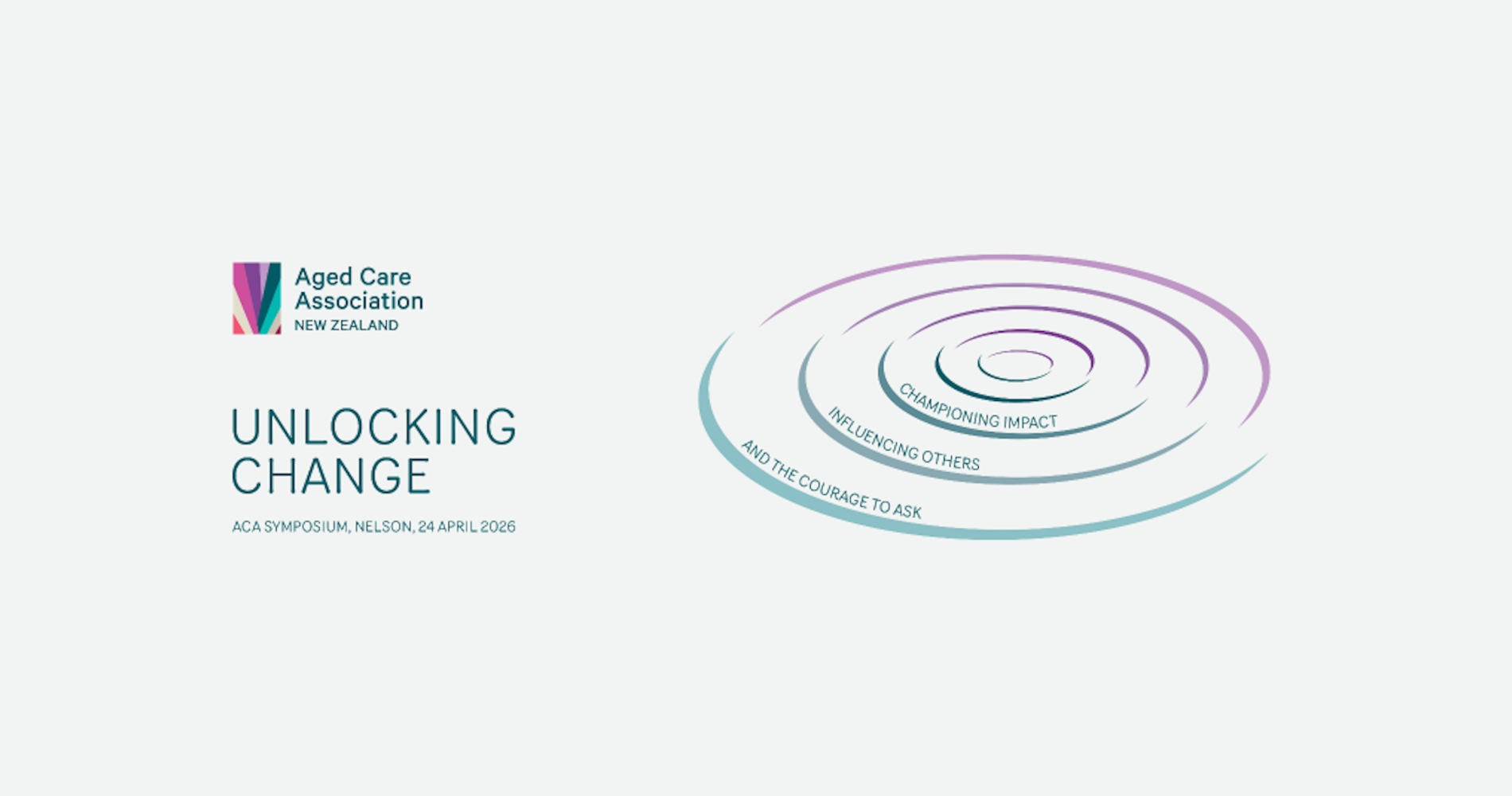
Aged Care Symposium 2026  Unlocking Change invites everyone in the sector, whether you’re on your first day or your fifteenth year, to share insights, spark new thinking, and help shape solutions that strengthen practice, teamwork, and resident experience. This symposium will foster opportunities to build confidence, explore possibilities, and recognise the collective wisdom that grows when we learn from one another. When we champion impact, influence others, and have the courage to ask, we unlock powerful drivers of progress. And while the answer might sometimes be “no,” believing in your idea, and being willing to knock on more than one door, can be the beginning of real, lasting change. Location, date and venue Location: Nelson Date: Friday 24 April, 8.30am – 4.30pm Venue: Trafalgar Centre Northern Extension Costs: $350 per person Open to all RN’s, Clinical Managers and anyone in support and allied health roles.
By Allied Health Admin December 10, 2025
Upcoming events of interest
By Allied Health Admin December 10, 2025
The Cancer Control Agency has just released two significant reports highlighting the experiences of disabled people with cancer in Aotearoa New Zealand: Disabled People and Cancer: Literature Review Ngā Tāngata Whaikaha me te mate pukupuku: he arotakenga mātātuhi The Burden of Cancer Among Disabled People: Diagnosis Insights He taumaha te mate pukupuku ki ngā tāngata whaikaha: Ngā Kitenga. Both reports are now available in a range of formats on the Agency’s website . Together these reports provide important new evidence to inform and improve cancer care for disabled people and their whānau. The literature review summarises international and local research, highlighting barriers disabled people face in accessing cancer care and pinpointing areas where more research is needed. The diagnosis insights report analyses cancer rates among disabled adults in New Zealand (2018–2022). It shows higher diagnosis rates for disabled people across all demographics analysed when compared to the total population. Diagnosis rates were also analysed for four specific cancers (breast, bowel, lung and prostate cancer). There are significantly higher rates for lung cancer among disabled people, and higher rates for breast and bowel cancer as well. With 17 per cent of people in New Zealand identified as disabled, these reports are another key tool in addressing inequities and informing better cancer care for all.
By Allied Health Admin December 10, 2025
As some members will know, we have farewelled our previous Executive Administrator, Nikky Winchester, and welcome as her successor, Pauline Downie. On behalf of all our members, we want to thank Nikky for her long-serving contribution to AHANZ and wish her well for the future. Pauline is contactable at admin@alliedhealth.org.nz .
By Allied Health Admin December 10, 2025
A huge thank you to everyone who jumped into the 2025 AHANZ Member Survey. We know you’re busy humans, so the time you gave us has been incredibly valuable. Your responses have given the Executive a really clear, grounded picture of what you want AHANZ to keep doing, and where you’d like us to lift our game as we shape our 2026–2028 Strategic Plan and step up advocacy ahead of the 2026 General Election. Many of you will have already seen or heard snippets of this feedback through conversations and recent meetings. What matters now is that we’re using it to guide the next phase of our work, so your voices are right at the centre of our planning. As co-Chair Alison Molloy puts it: “This survey has confirmed what we’ve been sensing across the sector; allied health is ready for a stronger, clearer national voice, and AHANZ is here to help make that happen.” She added: “We’re genuinely grateful for the honesty in the feedback. It’s given us practical direction, not just high-level wishes.” Here are the key recommendations you told us to prioritise: Short-term (next 0–3 months) Make member meetings shorter (no more than two hours) and schedule them at more workable times. Create a simple orientation pack for new reps. Set up easy ways to contribute between meetings (e.g., quick online surveys or a monthly virtual policy clinic). Prepare an initial ministerial briefing pack setting out our four strategic priorities. Medium-term (6–12 months) Develop a strong position paper on HPCA Act regulation, protection of professional titles, and fair recognition of smaller professions. Build an explicit Māori equity plan that embeds Te Tiriti commitments throughout our strategy. Lift AHANZ’s public profile with regular updates, media engagement, and proactive ministerial briefings. Longer-term (12–24 months) Support digital health/data pilot projects that show allied health impact. Grow the economic and prevention evidence base to strengthen our case with government. Thanks again for backing AHANZ with your insight and your time. We’ll keep sharing progress as we turn these recommendations into real-world action.
By Allied Health Admin December 10, 2025
The Government has been promoting its updated set of health targets - faster ED wait times, quicker cancer treatment, shorter GP appointments, improved ambulance response times. “There targets matter, of course,” AHANZ Co-Chair Robin Kerr says. “But they’re all measures of what happens once people are already unwell enough to need hospitals, EDs or urgent primary care. They tell us nothing about how we stop people reaching that point in the first place.” Robin says the continued emphasis on acute and secondary care is a missed opportunity, and one on which AHANZ is focusing its advocacy strategy. The Hidden in Plain Sight report and our recent advocacy papers make it clear the country can’t fix hospital pressure without strengthening community-based prevention, early intervention, and rehabilitation. Robin says AHANZ wants to see a shift toward “targets that measure wellness, not just illness.” “We’re not saying the current targets are wrong,” Robin says. “We’re saying they’re incomplete - if they only measure hospital-level performance, the system will only invest in hospital-level solutions.” With the election approaching, Robin says AHANZ is also watching closely for the Labour Party’s yet-to-be-released health policy. “Our message to Labour is simple: make allied health visible. Build us into your prevention strategy, your workforce planning, your community care models, your data systems. We are ready to be part of the solution, but you have to put us in the frame.” As advocacy ramps up, AHANZ’s position is clear: if New Zealand wants fewer people turning up at ED, it needs to invest in the people who prevent those visits in the first place. “The system needs what allied health can offer.”