Govt targets without transformation: Why allied health must be part of the health policy conversation
The Government has been promoting its updated set of health targets - faster ED wait times, quicker cancer treatment, shorter GP appointments, improved ambulance response times.
“There targets matter, of course,” AHANZ Co-Chair Robin Kerr says. “But they’re all measures of what happens once people are already unwell enough to need hospitals, EDs or urgent primary care. They tell us nothing about how we stop people reaching that point in the first place.”
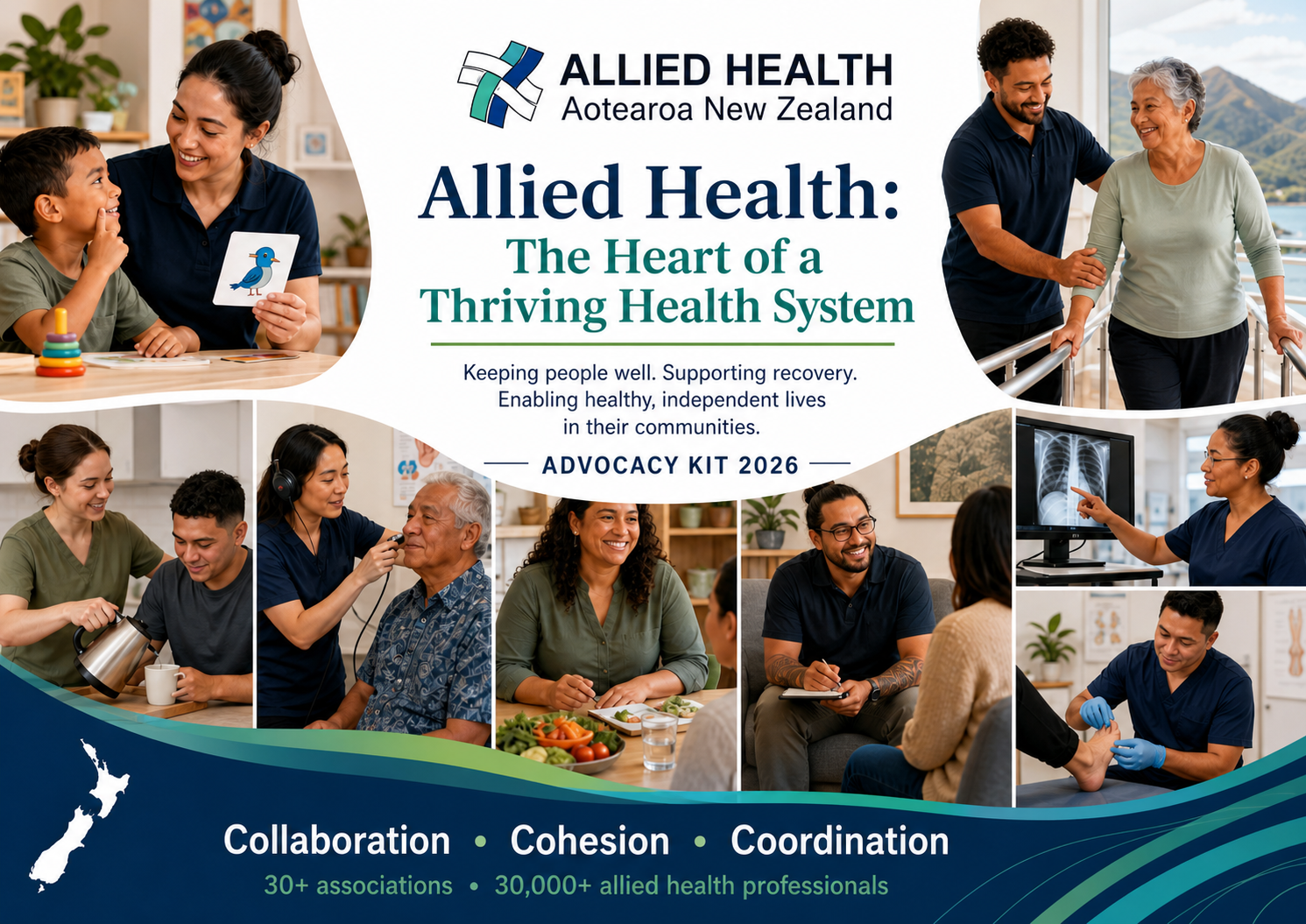
Robin says the continued emphasis on acute and secondary care is a missed opportunity, and one on which AHANZ is focusing its advocacy strategy. The Hidden in Plain Sight report and our recent advocacy papers make it clear the country can’t fix hospital pressure without strengthening community-based prevention, early intervention, and rehabilitation.
Robin says AHANZ wants to see a shift toward “targets that measure wellness, not just illness.”
“We’re not saying the current targets are wrong,” Robin says. “We’re saying they’re incomplete - if they only measure hospital-level performance, the system will only invest in hospital-level solutions.”
With the election approaching, Robin says AHANZ is also watching closely for the Labour Party’s yet-to-be-released health policy.
“Our message to Labour is simple: make allied health visible. Build us into your prevention strategy, your workforce planning, your community care models, your data systems. We are ready to be part of the solution, but you have to put us in the frame.”
As advocacy ramps up, AHANZ’s position is clear: if New Zealand wants fewer people turning up at ED, it needs to invest in the people who prevent those visits in the first place.
“The system needs what allied health can offer.”
AHANZ MEMBER NEWS, UPDATES AND EVENTS